
Building Something That Lasts
I grew up in a furniture shop.
My father, Peter Sustar, was a furniture maker in Milwaukee. He came here to study engineering at Marquette, but woodworking pulled him in another direction. He eventually started Sylvan Studio, which grew from a small cabinet shop into a custom furniture and millwork business employing six people.
Some of my earliest memories are of being in his shop. I had my own workbench and scroll saw, and apparently took the whole thing seriously enough that my mother had to sew hammer loops onto my pants. To me, making things wasn't unusual. It was simply what my father did, and I wanted to do it too.
My father died when I was ten years old.
While swimming in Lake Michigan, he was caught in a powerful undertow. He managed to get my oldest sister to safety before being swept away.
For a long time afterward, I stepped away from woodworking. I followed the path my father had originally intended and studied engineering at Marquette.
By my sophomore year, I knew I wanted a different kind of life—one centered around working with my hands. I considered leaving school, but John Stollenwerk, a close friend and mentor, convinced me to stay. Instead, he introduced me to Thomas Moser.
In 2009, I spent the summer working at Thos. Moser in Maine and living with Tom and his family. That summer changed the direction of my life. Moser showed me more than how to make furniture; he showed me how to build a life around the craft.
I came home and began making furniture.
What started with a few pieces gradually became a business. I continued building while in school and, later, while working as a civil engineer. Eventually, I made the same choice my father had made a generation earlier: I chose woodworking.
In 2012, at 23 years old, I bought an industrial building in Milwaukee and made it the home of Sustar Woodworks. I've been refining my craft there since.
Over time, the work has becomerestrained. I have little interest in chasing whatever happens to be fashionable at the moment.
I want to make furniture that belongs to its own time without being consumed by it.
I didn't set out to recreate what my father built. Sustar Woodworks is its own studio, and the work I make is my own.
But there is an unmistakable continuity.
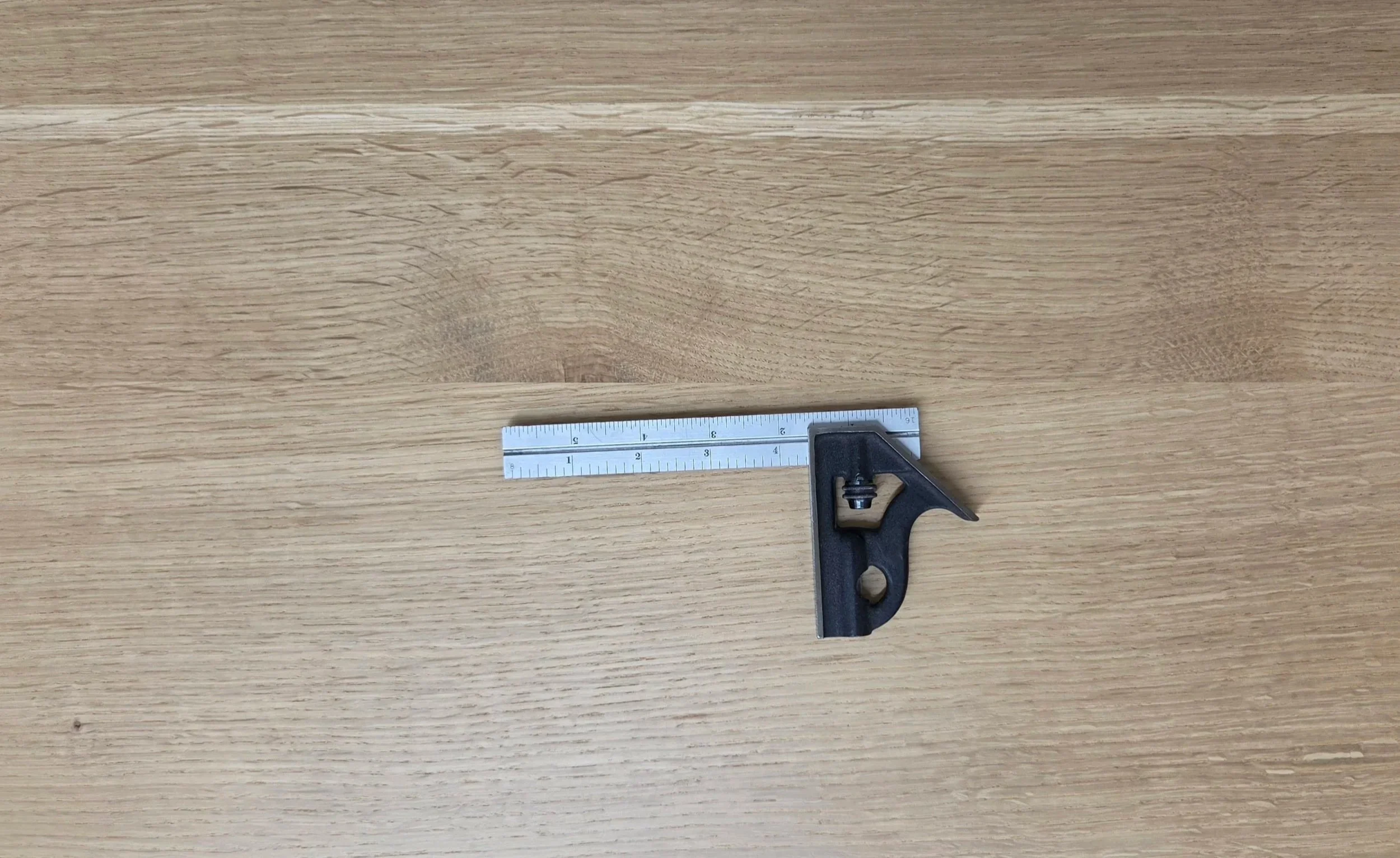
There is only one tool of his that I have: a six-inch Starrett combination square he carried on his tool belt. Today, I carry that same square on mine—along with a tape measure and a pencil.
I carry it because it was his, because it's useful, and because after all these years it still does exactly what it was made to do.
That's probably why I've never thought of furniture as disposable.
The pieces leaving my shop today will become dining tables, beds, desks, and cabinets. They'll get scratched. They'll darken with age. Children will grow up around them. Some will eventually move into houses belonging to people who weren't even born when I made them.
I won't know most of those stories.
That's all right.
My job is simply to build something capable of lasting long enough to become part of them.
~ Ian Sustar