
A Credenza That Defines a Room
The Halden Credenza
When Dan and Rachel invited me to build for their forever home, I knew the piece had to do more than just hold storage. Their house is wide open—kitchen, dining, and living room flowing as one—and the credenza was meant to quietly bring order to it all. It would sit behind their sofa, anchoring the dining area and shaping the way the whole room was read.
That’s the power of furniture done right. A single piece can define a space.
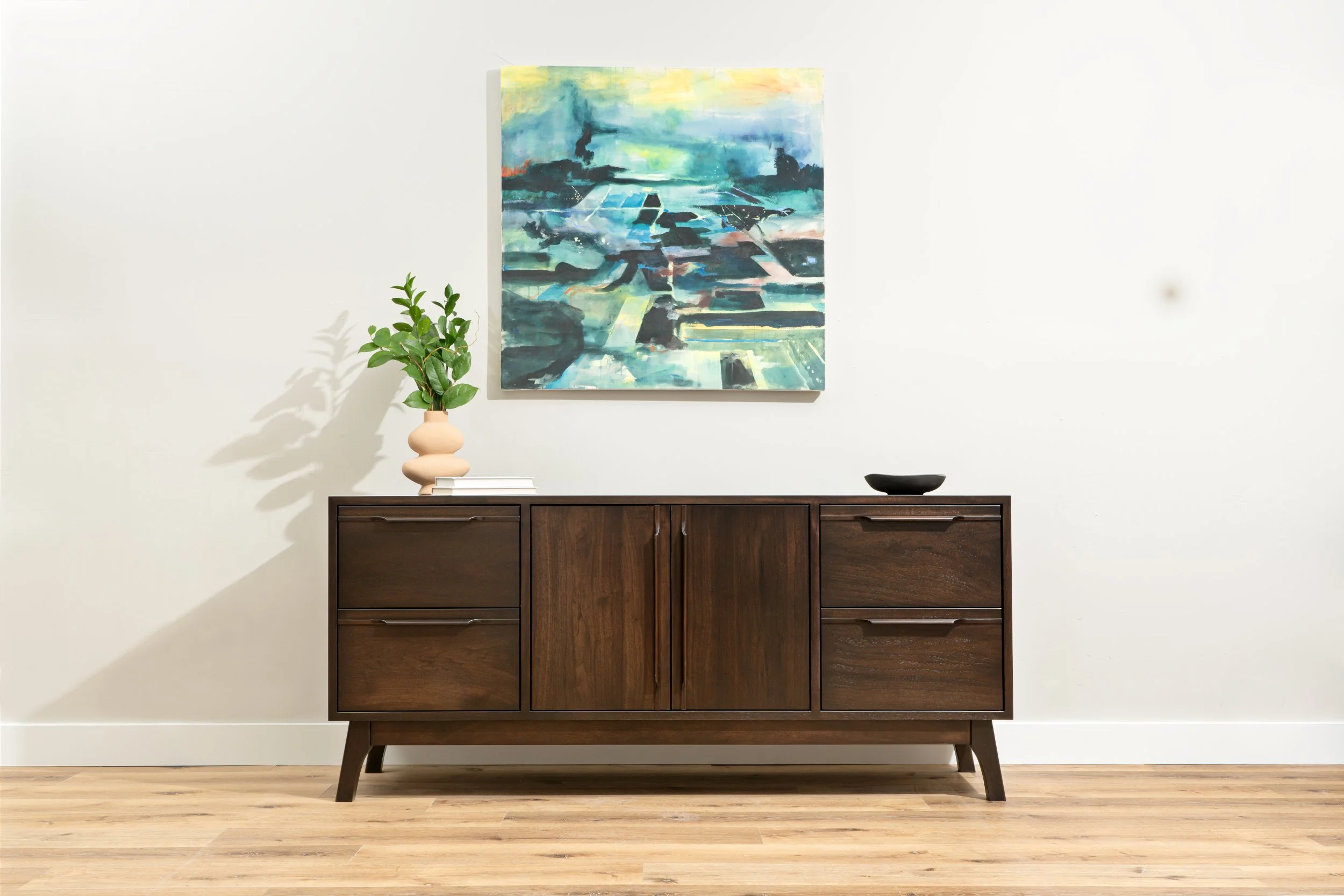
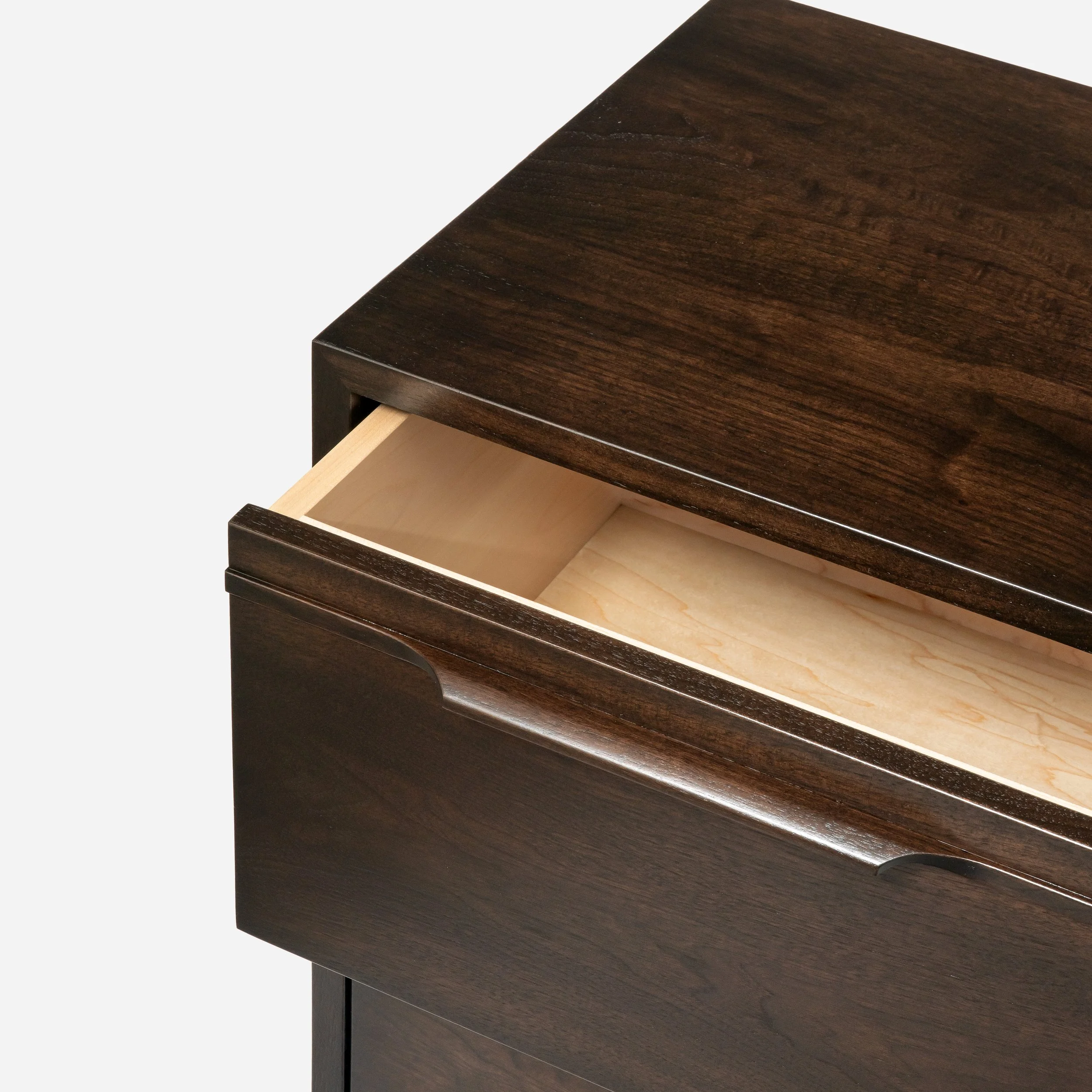
Design plays the lead role here. I wanted the credenza to feel strong enough to ground a room yet refined enough not to weigh it down. The proportions are long and low, a nod to mid-century forms, but I gave them more substance. Where vintage pieces can sometimes feel delicate, this one carries more presence—built to hold its own in an open concept home. The legs taper just enough to lighten the stance, the kind of subtle detail that shifts the whole feeling of the piece. The drawers and doors sit perfectly flush, a clean surface that only comes from careful planning and patient handwork. And instead of adding hardware, I carved the pulls directly into the walnut, letting the material itself become the design. Each of these decisions might seem small, but together they create a language of restraint, balance, and intention.
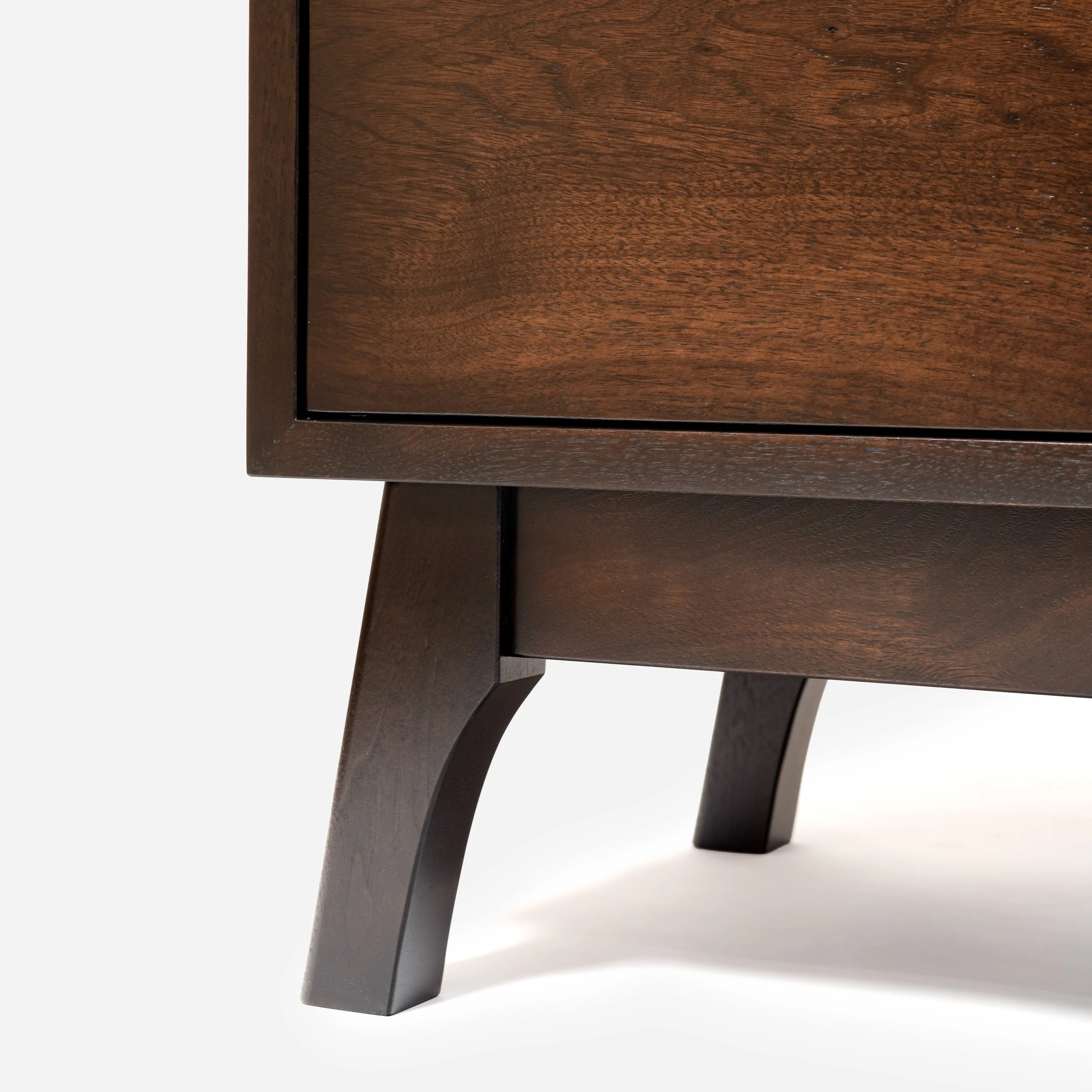
Material carries just as much weight in the story. I built the case from solid walnut, laying out each board so the grain flows across the front in harmony. Walnut has a warmth and depth that no other wood can quite replicate—dark and rich, but never flat. Finished in satin, the surface is protected yet still feels honest to the touch. That honesty matters. I don’t want to cover the wood up; I want it to speak. Because when you live with a piece every day, it should feel alive, not manufactured.
Now, in Dan and Rachel’s home, the credenza sits exactly where it belongs—holding the line between dining and living, defining one area without closing off the other. But the story doesn’t end at their house. This piece is proof of something larger: when design is intentional and craftsmanship is careful, furniture becomes more than function. It becomes part of the architecture of a home.
And that is the bigger theme in my work. Whether it’s a credenza, a table, or a chair, I build with the belief that furniture can quietly change the way a room feels. Done right, a single piece can give shape to a space, create order out of openness, and carry a sense of permanence that families can build their lives around. That’s why I build—not just to make something useful, but to make something lasting.